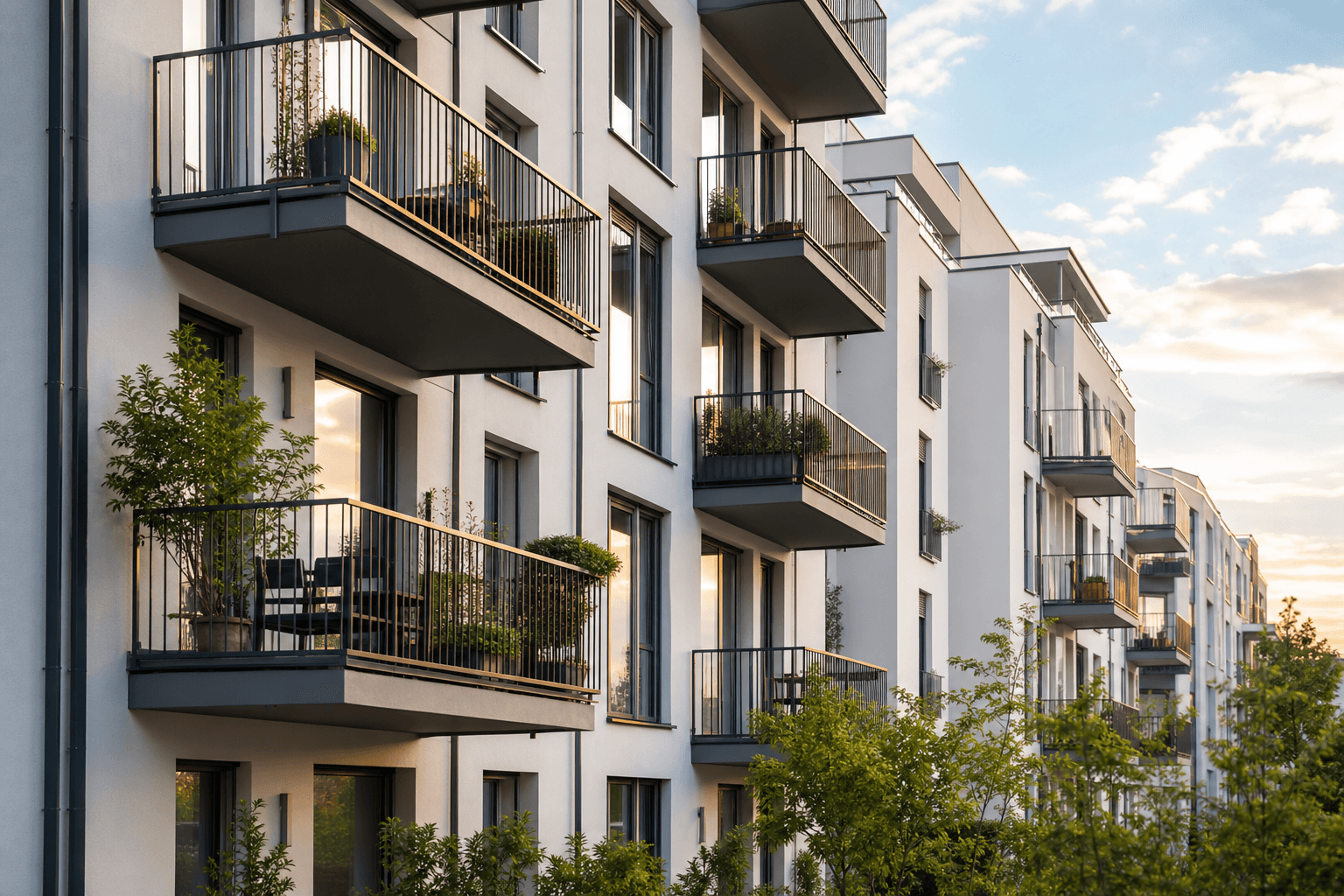
AfA for Rental Properties: How to Calculate Depreciation with Examples
Understand AfA depreciation for rental properties with practical examples and current 2025 tax rules to optimize your property investment returns.
InvestBud Team
Investment Analysts
Understanding AfA Depreciation for Rental Properties
In my analysis of over 200 rental properties, AfA depreciation has proven to be a pivotal tax advantage for property investors in Germany. AfA, or Abschreibung für Abnutzung, allows you to deduct part of a property's value annually to reflect wear and tear.
For residential buildings constructed after 1925, the standard AfA rate is 2% per year, calculated on the building's purchase price excluding land value. This means you can write off the building value over 50 years.
Test this investment idea on your own address
Pick a location and enter the purchase price. We'll prepare rental yield, cash flow, tax impact, and the cost breakdown as a private report.
Current tax regulations for 2025/2026 maintain this rate, so understanding the calculations is essential to maximize your tax benefits.
Practical Calculation of AfA with Numbers
Consider a property you recently analyzed in Berlin, purchased for EUR 400,000. The land value is EUR 100,000, and the building value is EUR 300,000.
Using the 2% AfA rate, your annual depreciation deduction is EUR 6,000 (2% of EUR 300,000). This reduces your taxable rental income each year, improving cash flow and lowering your tax burden.
If your gross rental income is EUR 18,000 annually, and other deductible expenses amount to EUR 4,000, your taxable income before AfA would be EUR 14,000. After applying AfA, taxable income falls to EUR 8,000.
Purchase price: EUR 400,000
Land value: EUR 100,000
Building value: EUR 300,000
AfA rate: 2% annually
Annual depreciation: EUR 6,000
Gross rental income: EUR 18,000
Other expenses: EUR 4,000
Taxable income before AfA: EUR 14,000
Taxable income after AfA: EUR 8,000
Legal Framework and Optimization Strategies
The AfA depreciation applies only to the building's value, excluding land, which is non-depreciable. To optimize, investors often commission a cost breakdown report (Bodenwertgutachten) to accurately separate land and building values.
For properties built before 1925, a higher AfA rate of 2.5% or the possibility of accelerated depreciation may apply, but only under specific conditions. Always consult with your tax advisor to ensure compliance.
Your depreciation deductions work together with other tax rules like the Spekulationsfrist (speculation period) and Mietpreisbremse (rent control), impacting your overall investment profitability.
Accurate land/building value split is crucial
Pre-1925 properties may benefit from different rates
AfA deductions reduce taxable rental income
Coordinate AfA with other tax regulations
Common Mistakes in AfA Tax Declarations
Many investors mistakenly apply AfA to the total purchase price including land, leading to tax audit adjustments and penalties.
Another frequent error is neglecting to separate acquisition costs like renovation, which may qualify for different depreciation methods or immediate deductions.
A property I recently reviewed in Hamburg showed a misclassification of renovation costs, missing out on accelerated depreciation benefits worth EUR 3,000 annually.
Always keep detailed records and consult updated tax laws to avoid these pitfalls.
How AfA Impacts Your Rental Yield and Cash Flow
AfA depreciation directly improves your net rental yield by lowering taxable income. For example, if your rental yield before tax is 4.5%, sensible AfA application can effectively increase your after-tax yield by 0.5 to 1 percentage points.
You can estimate your cash flow impact using calculators such as the ROI calculator and cash flow calculator.
Understanding AfA alongside rent levels helps you assess the real profitability of your investment compared to market averages, such as those detailed in our rental yield glossary.
Frequently Asked Questions
What exactly does AfA depreciation cover in rental properties?
AfA depreciation covers the wear and tear of the building component of your rental property. It allows you to deduct a fixed percentage of the building's purchase price annually from your taxable rental income, excluding the land value.
How do I determine the building value for AfA calculation?
The building value is derived by subtracting the land value from the total purchase price. A professional property valuation or cost breakdown report helps ensure accuracy, which is crucial because only the building value is depreciable.
Can I depreciate renovation costs with AfA?
Yes, but renovation costs are treated separately. Depending on the nature and extent of renovations, you might apply immediate expense deductions or use different depreciation rates. Consulting a tax advisor is recommended to optimize these deductions.
What happens if I apply AfA incorrectly in my tax return?
Incorrect application, such as depreciating the land value or misclassifying expenses, can lead to tax audits, reassessments, and penalties. It might also result in missed tax benefits, reducing your investment’s profitability.
Does AfA affect the sale of my rental property?
AfA reduces your property's book value, which can increase capital gains tax on sale. but, if you hold the property longer than the Spekulationsfrist (10 years), capital gains tax may not apply. Proper AfA use balances immediate tax benefits with long-term planning.
Calculate your potential tax savings and cash flow impact from AfA using Investbud's ROI calculator and cash flow calculator to make informed investment decisions.
Written by
InvestBud Team
Our team of investment analysts brings you data-driven insights on the German real estate market. We combine financial expertise with local market knowledge to help you make smarter investment decisions.
Test this investment idea on your own address
Pick a location and enter the purchase price. We'll prepare rental yield, cash flow, tax impact, and the cost breakdown as a private report.
Continue Reading
More Insights
Repayment 1, 2 or 3 Percent: The Right Strategy for Your Investment Property
Compare repayment rates of 1%, 2% and 3% for investment properties with concrete numbers, interest calculations, use financing examples and bank negotiation tips.
What Is an Annuitized Mortgage? Simply Explained for Property Investors
Annuitized mortgage explained for investors: learn how the fixed payment splits into interest and principal, see concrete calculations, and use practical tools.
How Much Equity Do You Really Need for Property Investment in 2026?
Concrete financing advice for 2026: exact interest and repayment calculations, equity-debt examples, and steps to improve bank conditions for property investments.